Pharmacist's Advice · 3 min read
Why Did My Skin Change After Moving to Europe?
 Fernanda LeitãoPharmacist and formulator, founder of Bacana22. November 2026

If your skin has become drier, tighter or more sensitive since you moved to Europe, you’re not alone. I went through it myself. The good news: you can help your skin adapt.
When I arrived in Berlin, my skin, which had always been easy-going in Brazil, became very dry and sensitive, with redness I had never had before. That is how Bacana was born: I wanted natural, gentle and effective skincare for Brazilian skin living in a completely different climate. In this article, I explain what happens and how to adapt your routine.
Good to know. If redness, itching or flaking don’t improve with a gentle routine, or if patches appear, see a dermatologist. Some conditions, such as rosacea or dermatitis, need medical follow-up.
What changes when you swap Brazil for Europe
- Cold and wind. Research shows that low humidity and low temperatures weaken the skin barrier: skin loses water faster, becomes more sensitive to friction and reacts more to irritants.
- Indoor heating. It may be cold and damp outside, but heating makes the air at home, at work and on public transport very dry for months.
- Hard water. In many parts of Europe, tap water is rich in calcium and magnesium. One study found that washing with hard water leaves more cleanser residue on the skin, which increases water loss and irritation.
- Hot showers. When it is cold, showers get hotter and longer. It feels great, but it dries the skin even more.
- Less sun, but not zero. Days are short and grey, yet UVA rays are still there, even in winter.
- The move itself. Stress, sleep, a different diet, homesickness: it all shows on your skin too.
Signs your skin is asking for help
- Your skin feels tight right after washing your face.
- Small flakes appear, especially around the nose and mouth.
- Your skin turns red or stings with products you used to tolerate.
- Your make-up looks patchy as the day goes on.
- Your skin is oily and tight at the same time: oily, dehydrated skin, very common among Brazilian women who move here.
How to adapt your routine to the European winter
- Swap soap for a gentle cleanser. Choose a cream cleanser, like our Gentle Facial Cleanser, and lukewarm rather than hot water.
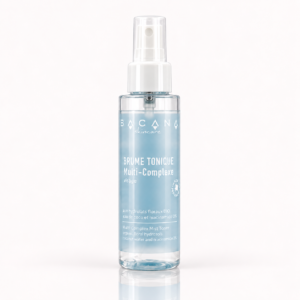
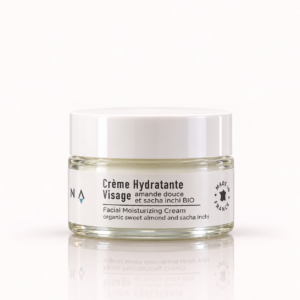
- Moisturise while your skin is still damp. Right after cleansing, mist on our Multi-Complex Mist Toner: it restores comfort and helps remove what the water left behind. Then apply our Facial Moisturizing Cream (Blooming Nature Cream).
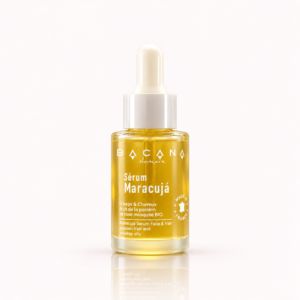
- In the evening, add an oil. Two or three drops of our Maracuja Serum Face & Hair (Tropical Shine) over your cream create a protective layer that holds in moisture.
- Look after your lips and dry patches with our Acai & Cupuacu Lip & Skin Balm, small enough to keep in your bag.
- Wear sunscreen even in winter, especially if you are prone to dark spots.
- Add moisture to the air at home. A humidifier, or simply a bowl of water near the radiator, already helps. And keep showers short and lukewarm.
What if my skin is oily?
Oily skin also suffers from cold and heating. The key is not to strip the oil with harsh products, because the skin responds by producing even more. Keep cleansing gentle and moisturising consistent, but in light layers: mist and cream in the morning, and the oil only on dry areas in the evening.
Your skin hasn’t got “worse”: it is adapting to a climate completely different from the one it grew up in. With a few adjustments and a little patience, it becomes comfortable again. It usually takes four to six weeks to see the difference.
Sources
- Engebretsen KA et al. The effect of environmental humidity and temperature on skin barrier function and dermatitis. J Eur Acad Dermatol Venereol. 2016;30(2):223-249. https://pubmed.ncbi.nlm.nih.gov/26449379/
- Danby SG et al. The Effect of Water Hardness on Surfactant Deposition after Washing and Subsequent Skin Irritation in Atopic Dermatitis Patients and Healthy Control Subjects. J Invest Dermatol. 2018;138(1):68-77. https://pubmed.ncbi.nlm.nih.gov/28927888/